EV Charger Installation Cost: What to Expect in 2026
Table of Contents
What Affects Your EV Charger Installation Cost
Charger Type and Power Rating
Electrical Upgrades and Cable Runs
What to Expect from an EV Charger Installation Quote
Installation Options: Tethered vs Untethered and Smart Features
Home EV Charger Installation Time: What Slows It Down
The Cost to Run an EV Charger at Home
Home Charging vs Public Charging Costs
Common Mistakes to Avoid
Conclusion
Frequently Asked Questions
Last Updated: 18 October 2026
What Affects Your EV Charger Installation Cost
The biggest factor in your EV charger installation cost is not the charger itself. It is the state of your existing electrics. A straightforward job on a modern consumer unit is quick work. An older property with a packed fuse board and a long cable run to the driveway is a different story.
At Yorks EV, we price home charger work around three things: the unit, the labour, and any electrical upgrades needed to make the install safe and compliant. That last part is where surprises usually hide.

Charger Type and Power Rating
A 7kW charger is the standard choice for most homes. It charges overnight and suits typical daily mileage. A 22kW unit needs a three-phase supply, which most homes do not have. If you want one, budget for a supply upgrade as part of the quote.
Electrical Upgrades and Cable Runs
Cable length matters more than people expect. A short run from the consumer unit to the mounting point keeps labour low. A long run around the house, under a path, or to a detached garage adds time and materials. Older fuse boards may need replacing before any charger can be connected safely.
Watch Out Never let anyone install a charger without checking your earthing arrangement first. Getting this wrong is a safety issue, not just a paperwork one, and it can mean the install has to be redone.
What to Expect from an EV Charger Installation Quote
A proper EV charger installation quote should list every part of the job in plain terms. Ask for the unit model, the cable length assumed, any electrical remedial work, and whether VAT is included. If a quote is a single number with no breakdown, push back.
Here is what a clear quote should cover:
Charger make and model, with its power rating
Assumed cable run length and route
Consumer unit or earthing work, if needed
Labour, materials and VAT
Any payment options, such as spreading the cost
We keep our quotes itemised for exactly this reason. You should be able to see what you are paying for before you commit. GOV.UK guidance on electric vehicle chargepoint grants sets out what support may be available, so check eligibility before you sign anything.
Installation Options: Tethered vs Untethered and Smart Features
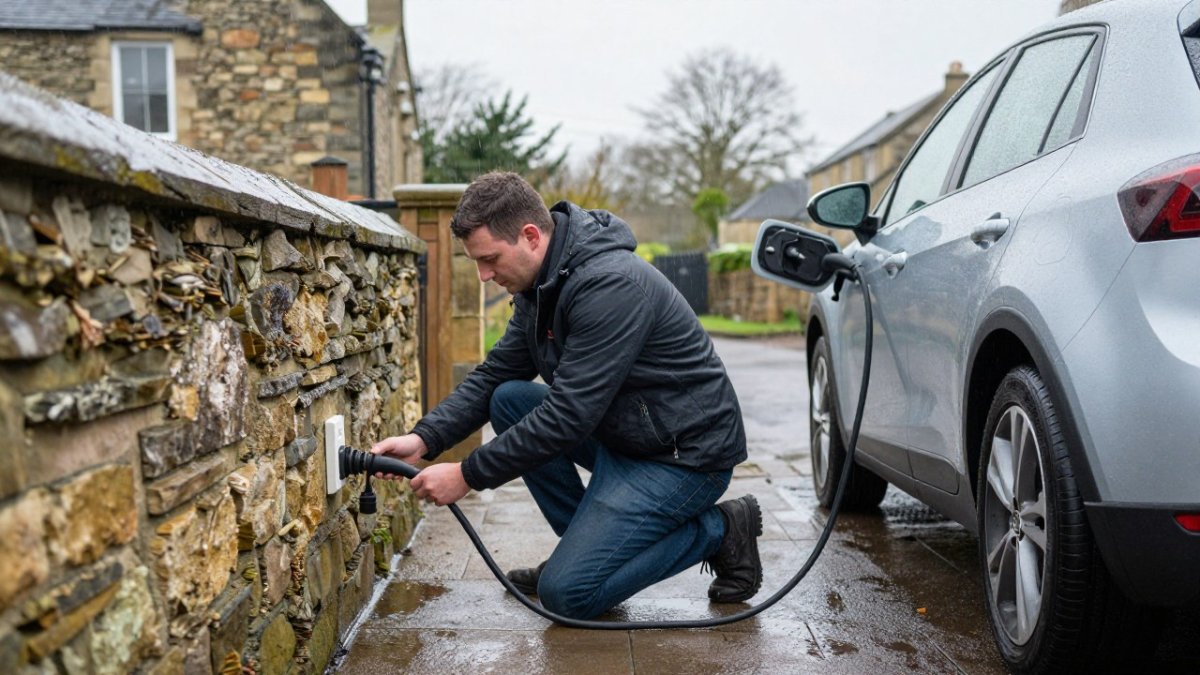
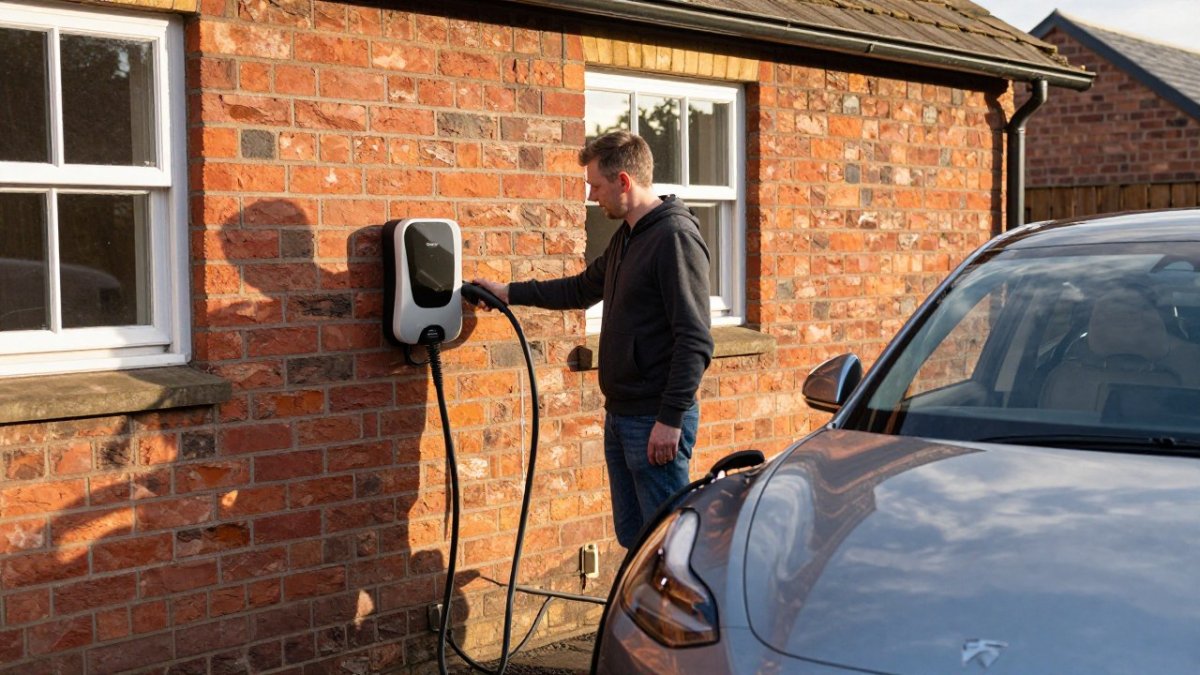
Tethered chargers have the cable built in. Untethered units use your own cable and look neater on a wall. Tethered is easier day to day. Untethered gives you flexibility if you change cars or want a cleaner finish.
Smart features are now standard on most units. Load balancing, scheduling and app control all help you charge when electricity is cheapest. These features do not usually add much to the install, but they do affect how the charger is set up and configured.
Option | Best For | Trade-off |
Tethered 7kW | Most homes, daily charging | Cable always visible |
Untethered 7kW | Neat finishes, shared driveways | You supply and store the cable |
22kW three-phase | High mileage, large battery | Needs a three-phase supply |
Pro Tip If your driveway is shared or your parking spot changes, an untethered unit avoids cable clutter and lets each driver use their own lead.
Home EV Charger Installation Time: What Slows It Down
Most home EV charger installations take a few hours. The home EV charger installation time stretches when the job needs extra work: a new consumer unit, a long cable route, or trenching across a garden. None of these are unusual, but they need planning.
We aim to complete installations within 14 days of your quote being accepted. Rural postcodes are no barrier to that timescale, and there is no travelling charge across North, South, East and West Yorkshire. If your property needs extra work, we tell you before we start, not halfway through.
The Cost to Run an EV Charger at Home
The cost to run an EV charger at home depends on your electricity tariff and how much you drive. Charging overnight on a cheaper tariff is where the savings sit. A full charge on a standard home supply costs far less than topping up at a public rapid charger.
To work out your running cost, multiply your battery size by your unit rate. A 60kWh battery charged from near empty on a cheap overnight rate is a modest outlay. Do the same sum on a standard rate and it climbs. The charger itself is a one-off cost; the tariff is what you live with.
Home Charging vs Public Charging Costs
Home charging vs public charging costs is not a close contest. Public rapid chargers charge a premium per unit, and the gap adds up over a year of regular driving. Home charging is slower but far cheaper per mile.
The trade-off is convenience versus price. Public charging suits long journeys and emergencies. For everyday top-ups, charging at home wins on cost almost every time. If you are currently relying on public networks, moving to home charging is the single biggest saving available to you.
Common Mistakes to Avoid
The most common mistake is choosing on unit price alone. A cheap charger fitted badly costs more in the long run. The second is skipping the electrical survey, which leads to surprise remedial work mid-install.
A few more to watch:
Assuming every quote includes VAT and materials
Ignoring cable route length when comparing prices
Booking an installer without checking their qualifications
Forgetting to check grant eligibility before committing
Key Takeaway The cheapest quote is rarely the cheapest job. Ask what is included, who is doing the work, and what happens if your electrics need upgrading.
Conclusion
Getting a clear, itemised EV charger installation cost is the difference between a smooth install and an unpleasant surprise. The variables are knowable: your electrics, your cable route, and your chosen unit. Get those pinned down in writing and the rest follows.
At Yorks EV, our time-served electricians handle the survey, the install and the paperwork. We include all materials, labour and VAT in our standard package, offer Klarna to spread the cost, and complete most jobs within 14 days. Get a quote from Yorks Ev and charge at home with confidence.
Frequently Asked Questions
How much does it cost to install a home EV charger?
The EV charger installation cost depends on several factors: the charger model, whether your consumer unit needs upgrading, cable run length, and any groundworks required. A standard supply-and-install package with all materials, labour and VAT included is the clearest way to budget. Rather than quoting a headline figure that may not apply to your property, request a fixed-price EV charger installation quote after a survey so you know the full amount before work begins.
How long does home EV charger installation time usually take?
A straightforward installation typically takes a few hours on the day, but home EV charger installation time also includes the survey, any electrical upgrades, and scheduling. Properties needing a consumer unit upgrade or a long cable run can add time. Choosing an installer who confirms a realistic timeline upfront, and who handles the paperwork, helps avoid potential delays.
Is it cheaper to charge an electric car at home or at a public charging station?
Home charging is almost always cheaper per mile than public rapid charging. Domestic electricity tariffs, especially off-peak EV tariffs, cost significantly less per kWh than public rapid networks. The gap widens further when you compare home charging vs public charging costs over a year of typical mileage. A home charger also means you start every day with a full battery, reducing reliance on expensive en-route charging.
Can I get a grant towards a home EV charger?
Government grant schemes for home EV chargers have changed over time, and eligibility rules vary. Some schemes are aimed at renters, flat owners, or specific property types rather than all homeowners. Check the current rules on the government website or ask your installer during the quote stage. A reputable installer will tell you honestly whether any grant applies to your situation rather than promising savings that do not exist.
Get a Quote

Comments