Best Portable EV Chargers for Apartment Renters
Last Updated: November 13, 2026
Quick Summary
Portable EV chargers suit renters who cannot fit a wall-mounted unit, because they plug into an existing socket and can travel with you if you move. They deliver less power than a fixed wallbox, so they suit overnight top-ups rather than rapid charging. Check your socket type, cable reach and landlord permission first.
Portable chargers suit tenants, flat residents and anyone whose landlord has not agreed to alterations.
A portable unit plugs into an existing socket and can travel with you if you move.
Portable chargers usually deliver far less power than a fixed wallbox, so they suit overnight top-ups.
Confirm your vehicle's inlet type and the charger's plug type and current rating before buying.
Ask your landlord or managing agent for permission in writing before using any charger.
Table of Contents
Why Portable Chargers Suit Renters Without a Driveway
Portable EV chargers suit people who cannot install a wall-mounted unit. That includes tenants, flat residents with allocated bays, and anyone whose landlord or management company has not yet agreed to alterations. A portable unit plugs into an existing socket and can travel with you if you move.

The trade-off is speed. A portable charger usually delivers far less power than a fixed wallbox, so it suits overnight top-ups rather than rapid recharging. For many commuters, that is enough.
How We Evaluated Portable Chargers for Flat Living
We assessed portable options against the conditions renters tend to face. These were:
Socket type: whether the unit works with a standard 13A domestic socket
Cable length: whether it can reach a parking space without a trailing lead across a pavement
Charging speed: how many miles or kilometres of range an overnight session adds
Portability: weight, storage space and suitability for a communal car park
Connector compatibility: whether the vehicle's inlet matches the unit
Pricing for individual products varies and changes often, so we have not quoted figures here. Check current prices directly with each manufacturer or retailer.
Top Portable EV Chargers Compared
Portable chargers are not interchangeable. The right one depends less on the badge and more on what you can plug into: a standard 13A domestic socket, a higher-power industrial or commando outlet, a shared or communal supply, or no private parking at all. Use the table below as a starting point, then read the outlet-access framework underneath before you buy.
Charger | Typical outlet | Best for | Key limitation to check |
Tesla Mobile Connector | 13A domestic (with UK adapter) or commando | Tesla owners wanting an OEM unit that travels | Adaptors sold separately; confirm UK plug type and current rating |
Juice Booster 3 Air | 13A domestic and multiple industrial adaptors | Renters who may move between socket types | Higher purchase price; verify UK adaptor set is included |
Lectron Portable Level 1 & 2 | 13A domestic and higher-power supply | Renters wanting one unit for two outlet types |
|
Lectron Portable Level 2 | Higher-power supply only | Drivers with access to a commando or dedicated circuit | Will not run from a 13A socket; supply must be assessed |
ELEGRP Fast Level 2 (J1772) | Higher-power supply | Non-Tesla drivers researching faster portable charging | J1772 inlet only; UK availability and plug type unverified |
Splitvolt and Mustart | 13A domestic and higher-power variants | Travel and backup charging | Model-level UK specification and connector must be confirmed |
Anker SOLIX F3800 | Battery power station, not a wall-fed charger | Portable power for tools and camping | Direct EV charging is not confirmed; treat as a power station, not an EV charger |
A decision framework by outlet access
If you have a suitable outdoor 13A socket at your allocated bay: prioritise a unit with a long enough cable to reach the inlet without an extension lead, a weather-rated control box, and a current limiter you can set to 10A or 8A to reduce socket load.
If you have access to a higher-power outlet (commando or dedicated circuit): a Level 2 portable unit will cut charging time substantially, but only if the circuit and protective devices have been assessed by a qualified electrician. Lectron Portable Level 2 and ELEGRP are the options to research, subject to UK plug and availability checks.
If you rely on a shared or communal supply: treat any charger as a permission question first. Many managing agents prohibit drawing power from communal sockets, and some leasehold agreements restrict trailing leads across shared areas. Confirm in writing before buying.
If you have no private parking: a portable charger is not the answer. Public charging, workplace charging or a neighbour's shared supply (with permission) are the realistic routes, and a battery power station will not substitute for a wall-fed EV charger.
Watch out: a charger advertised as 'Level 2' will not run safely, or at all, from a 13A domestic socket, check the plug type and current rating before purchase.
Specifications and availability change over time, so verify the plug type, current rating and connector with the manufacturer before purchase.
Can a Three-Pin EV Charger Be Used Safely?
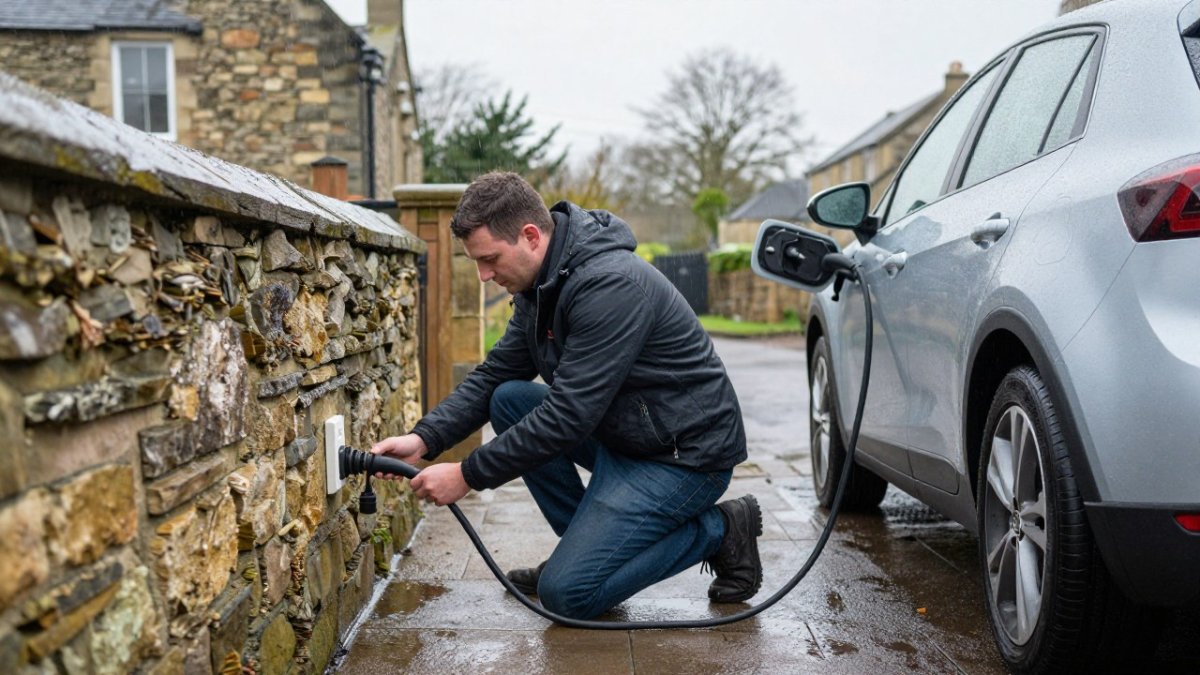
A three-pin EV charger plugs into a standard household socket, usually a 13A outlet. This is the lowest-power option, and it is often called Level 1 charging. It is slow, but it requires no installation and can work for drivers who only cover short daily distances.
Safety depends on the condition of the socket and the wiring behind it. Overloaded sockets, worn plugs and extension leads can overheat (Electrical Safety Advice for Overloading Sockets). Avoid using extension cables with any EV charger unless the manufacturer specifically permits it. If a socket feels warm, shows scorch marks or the plug fits loosely, have it checked by a qualified electrician before charging.
Getting Landlord Permission for an EV Charger
Renters generally need the landlord's or managing agent's consent before fitting anything fixed, drilling walls or altering the electrics. A portable charger that plugs into an existing socket is often easier to justify, but some leases still restrict using high-powered appliances or running cables across shared areas.
Ask for permission in writing, explain the charger type, and confirm who will be responsible for any damage or repairs. Find out whether a standard electrician can handle the installation work. If the landlord refuses a fixed unit, a portable option may still be acceptable. Check your tenancy agreement and, where relevant, communal parking rules before you buy.
Charging Time, Cost and Choosing the Right EV Charger for Renters
The estimates below show the mechanism, with the assumptions stated so you can substitute your own figures.
How to estimate charging time
Charging time depends on three things: the power the charger can deliver, the power your socket and circuit can safely supply, and your vehicle's efficiency. A standard 13A domestic socket delivers roughly 2.3 kW continuously; a higher-power portable unit on a suitable circuit can deliver considerably more, but only if the circuit has been assessed.
Take your usable battery capacity in kWh (for example, 50 kWh).
Divide by the charger's delivered power in kW (for example, 2.3 kW) to get hours for a full charge (about 22 hours in this example).
Multiply the hours by your vehicle's efficiency in miles per kWh (for example, 3.5 miles per kWh) to estimate miles added per hour (about 8 miles per hour at 2.3 kW).
A common pattern is that an overnight 10-hour session on a 13A socket adds roughly 70-80 miles of range for a typical efficiency of 3-4 miles per kWh. That covers many commutes, but not a long weekend trip. Higher-power portable units shorten the time proportionally, provided the supply supports them.
How to estimate running cost
Running cost is the charger's delivered energy multiplied by your electricity unit rate. On a domestic tariff, a 10-hour session at 2.3 kW draws about 23 kWh; Public rapid charging typically costs several times more per kWh, so home charging is usually cheaper per mile, but the gap depends on your tariff, any off-peak window, and your vehicle's efficiency.
Use your own tariff's unit rate and any standing charge treatment, and check whether your supplier offers an off-peak EV window, because scheduling a slow overnight charge into a cheaper window is one of the few genuine cost levers renters have.
Choosing the right charger for your situation
Daily mileage: short commutes may need only a slow overnight top-up; longer commutes may justify a higher-power unit if the supply allows.
Available socket: a 13A outlet caps you at roughly 2.3 kW; a higher-power outlet needs an electrician's assessment first.
Parking arrangement: cable length, routing and permission to cross shared areas matter more in flats than raw power.
Connector: confirm your vehicle's inlet type (Type 2, CCS or J1772) before buying.
Portability: a unit you can unplug and store is easier to justify to a landlord than a fixed installation.
Watch out: estimates assume a healthy circuit and a charger delivering its rated current, a worn socket, a long cable run or a current-limited charger will add hours, so build in a margin before relying on an overnight session.
Planning Your Next Step Towards Reliable Charging
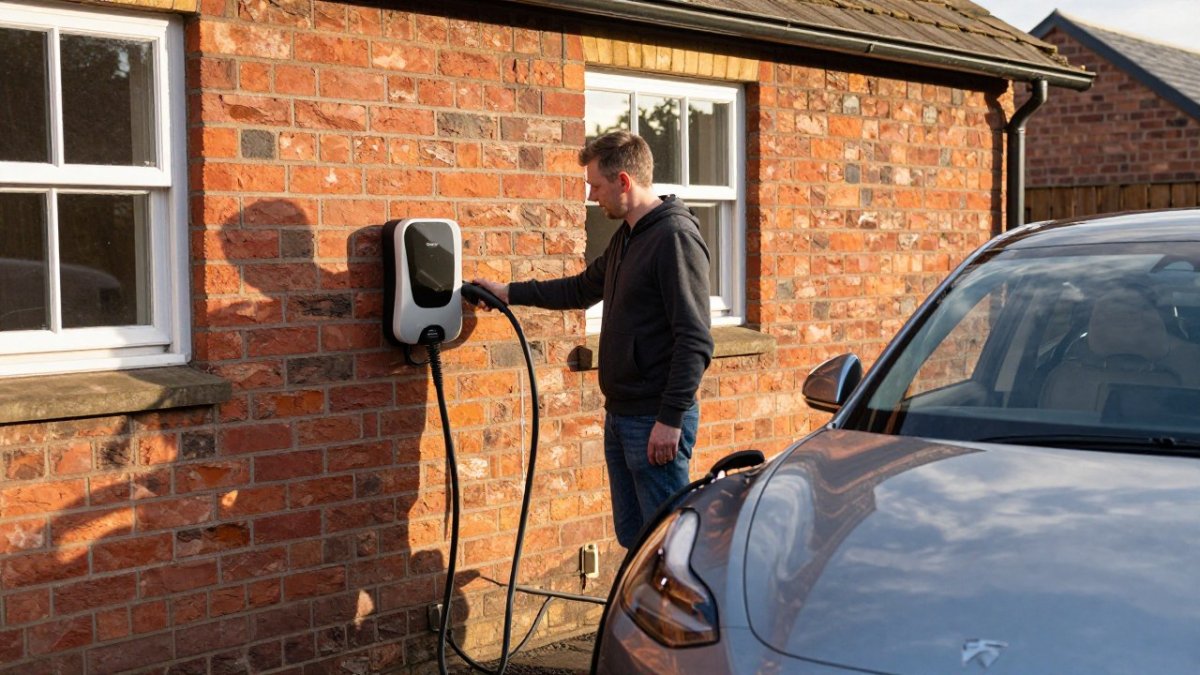
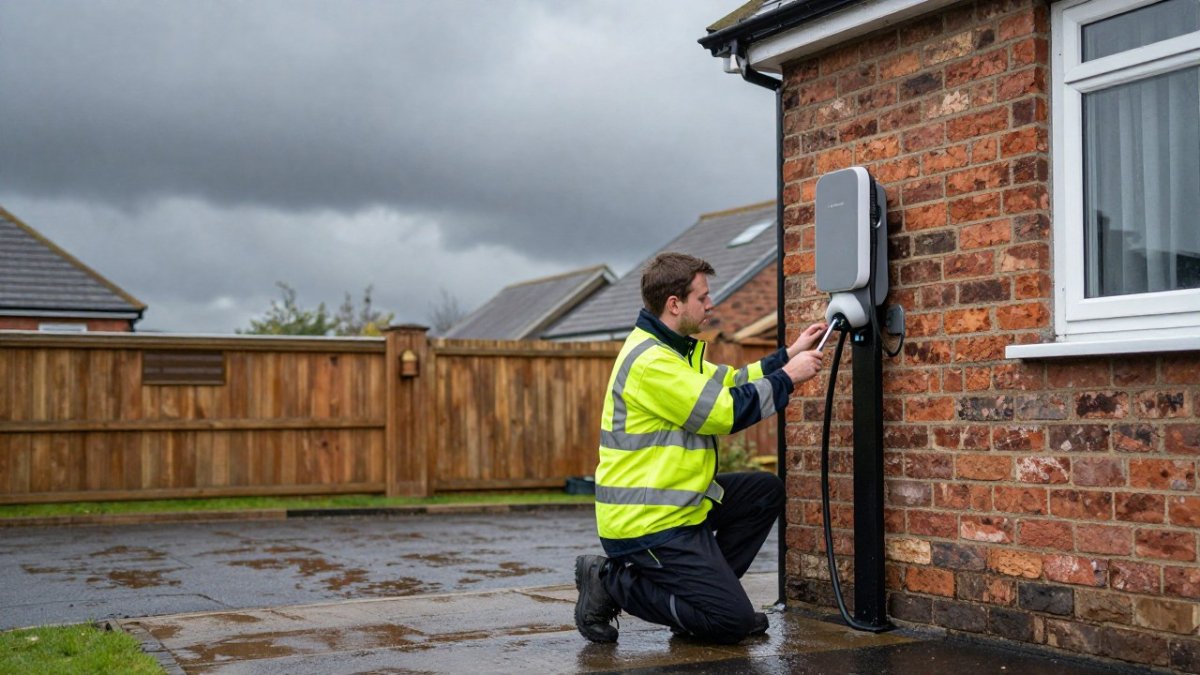
A portable charger is a practical answer for many renters, but it is not always the final answer. If you have landlord permission and a suitable parking space, a fixed home charger installed by a qualified electrician will usually deliver faster, safer and more convenient charging. Yorks EV supplies and installs domestic EV chargers across Yorkshire, with a standard package that includes materials, labour and VAT. Our electricians are highly qualified and time-served. For a clear view of your options and a tailored quote, get in touch with the team at Yorks EV.
Government guidance on electric vehicle charging at home
Frequently Asked Questions
Can you charge an electric car at a flat without a driveway?
Yes, though it depends on your parking arrangements and whether you can reach a suitable power supply. Many flat residents rely on a portable charger plugged into an existing socket, which avoids fixed installation. Check whether your allocated space is near an accessible outlet, and confirm with your landlord or management company before running any cable across shared areas. Public and workplace charging can fill the gaps, but costs and availability vary, so compare them against your daily mileage. Yorks EV can advise on which option suits your property and parking situation.
Are portable EV chargers suitable for apartment renters?
They can be, particularly for renters who cannot install a fixed wallbox. Portable chargers are easier to store and take with you if you move, and they do not require drilling or wiring changes. However, charging speed depends on the power output and the socket you use, so overnight charging on a standard supply will be slower than a dedicated unit. Confirm the connector type matches your vehicle and that the charger is suitable for the supply you plan to use before buying.
Can I use a standard three-pin socket to charge an electric car?
A three-pin socket can technically be used for slow charging, but it is not designed for sustained high-current use. Running a vehicle for long periods on a standard domestic outlet can cause the socket, plug or cable to overheat, particularly if the cable is extended or the connection is poor. Use a charger rated for this purpose, ideally one that monitors temperature, and avoid extension leads. If you rely on this method regularly, a proper installation assessment is the safer option, and Yorks EV can provide one.
Do I need my landlord's permission to install an EV charger?
For a portable charger that plugs into an existing socket, permission is usually simpler to obtain because nothing is fixed to the building. A fixed wallbox almost always needs written consent from the landlord or freeholder, and may require the building's electrical supply to be assessed. Put any agreement in writing, including who is responsible for the equipment at the end of your tenancy. Check your lease and any management company rules, as communal car parks often have their own requirements.
Comments