Alternatives to Wall Mounted EV Chargers
Table of Contents
Why Homeowners Look Beyond Wall-Mounted Chargers
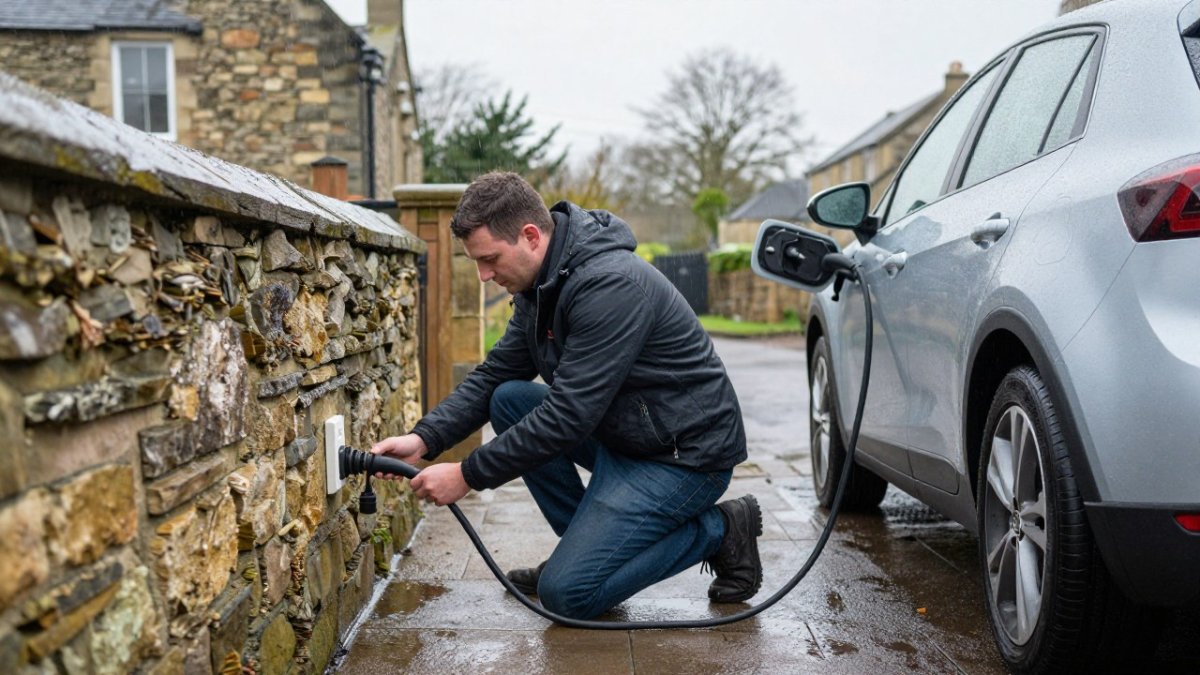
Portable Charging Stations: Flexibility Without Installation
3-Pin Plug EV Charging Safety and Practical Limitations
Home EV Charging Without a Driveway: Cable and Layout Solutions
EV Cable Gully Installation for Safer Outdoor Routing
Smart Plug-In Chargers: Convenience Without Rewiring
Choosing the Right Alternative for Your Situation
Frequently Asked Questions
Last Updated: October 4, 2026
Why Homeowners Look Beyond Wall-Mounted Chargers
Alternatives to wall mounted EV chargers address a real problem: not every home suits permanent installation. Renters face landlord restrictions. Properties with old electrical panels need costly upgrades. Some driveways lack the right access or weatherproofing. Others simply want to avoid the installation hassle or expense.
The flexibility argument is compelling. A portable unit moves with you. It requires no rewiring. It works from standard sockets or industrial outlets depending on the model. For homeowners exploring alternatives to wall mounted EV chargers, these options deliver genuine convenience without permanent commitment.
At Yorks Ev, we've installed hundreds of wall-mounted units across Yorkshire. We also understand that not every situation calls for permanent infrastructure. This guide covers the practical alternatives available, their real limitations, and how to match the right solution to your actual circumstances.
The key distinction isn't between "good" and "bad" options. It's between solutions that fit your situation and those that don't. A portable charger suits temporary needs or properties where installation isn't feasible. A wall-mounted unit from Yorks Ev suits homes where you'll stay for years and want the fastest, most convenient charging available.
Pro Tip Most EV owners underestimate how much they'll value home charging convenience. Even a modest 7kW wall unit beats public rapid chargers for daily use because your car charges overnight whilst you sleep. Alternatives to wall mounted EV chargers work best for specific constraints, not as general upgrades.
Portable Charging Stations: Flexibility Without Installation
Portable charging stations offer the simplest alternative to wall-mounted units. They plug into existing outlets and deliver power without rewiring or permits.
How they work: A portable station contains charging electronics in a weatherproof box. You plug it into a suitable outlet, then connect your vehicle's charging cable. Power output depends on the outlet type and the station's rating. Most deliver between 16A and 40A, which translates to charging speeds comparable to home wall units but slower than rapid chargers.
Portable Station | Starting Price | Key Advantage | Best For |
Grizzl-E Classic | £350 | Rugged, no setup required | Straightforward charging without complexity |
EVIQO EV Charger | £399 | Smart monitoring and adjustable current | Data-conscious users with older circuits |
ChargePoint Home Flex | £549 | App control and scheduling | Renters wanting smart features plus flexibility |
Real limitations: Portable units require a suitable outlet nearby. A standard 3-pin domestic socket delivers only 3kW, far too slow for practical daily use. You need a 16A or 32A industrial outlet, which many homes lack. Installing one still requires an electrician, though it's simpler than a full wall-mounted unit.
Weather exposure matters. Leaving a portable station outside year-round subjects it to moisture and temperature swings. Most are weatherproof, but they're designed for intermittent use, not permanent outdoor installation.
Key Takeaway Portable charging stations solve the "no installation" problem only if you have the right outlet type already. Without it, you're back to installation work.
3-Pin Plug EV Charging Safety and Practical Limitations
The 3-pin plug represents the absolute baseline for EV charging at home. It's the socket in nearly every UK home. It's also the slowest and most problematic option for actual daily use.
What 3-pin plug charging delivers: A standard domestic 3-pin socket supplies 13A at 230V, delivering approximately 3kW of power. This charges an EV at roughly 12-15 miles of range per hour. For a typical 50kWh battery, a full charge takes 15-20 hours.
For occasional use, topping up before a short journey or maintaining charge during a week of light driving, this works. For actual daily EV ownership, it falls short. Most EV owners drive 20-40 miles daily. A 3-pin charger covers this overnight, but barely.
3-pin plug EV charging safety concerns are real. Continuous high-current draw through a domestic socket designed for kettles and hairdryers creates heat. Older wiring and loose connections amplify this risk. The socket itself wasn't engineered for the sustained 13A draw that EV charging demands. Fire risk, whilst uncommon, is documented.
Many EV manufacturers explicitly warn against relying on 3-pin charging for regular use. Tesla supplies adapters for emergency use only. Nissan recommends against it for daily charging. This isn't marketing, it's engineering guidance based on electrical safety.
Practical reality: A 3-pin plug works as a backup. It's useful when travelling and you need to trickle-charge from a standard socket. For your primary home charging solution, it's inadequate.
Watch Out Using 3-pin plug EV charging regularly risks overheating the socket and wiring. Dedicated charging infrastructure, whether portable or wall-mounted, is safer and faster. Never treat a standard domestic socket as your primary home charging method.
Home EV Charging Without a Driveway: Cable and Layout Solutions
Many properties lack a driveway entirely. Terraced houses, flats with communal parking, and properties with street parking create real challenges for home charging infrastructure.
The practical solution involves cable routing from your property to your vehicle's regular parking location. This might mean running a weatherproof cable along the front of your house, across a garden, or through a gated area.
Cable management is critical here. A loose charging cable across a pathway becomes a trip hazard. Exposed to weather, it degrades. Run over repeatedly by vehicles, it fails.

Cable gully installation offers one solution. A gully is a shallow channel, typically plastic or concrete, that runs along the ground. Your charging cable sits inside, protected from weather and vehicle damage.
The gully approach requires groundwork. You're essentially creating a permanent infrastructure change. Cost depends on distance and ground conditions. For a 10-15 metre run, expect a meaningful investment. For shorter distances or properties with existing pathways, it's often unnecessary.
Alternative layouts include wall-mounted cable trays that run along the exterior of the building, or overhead cable runs supported by brackets. Each has trade-offs between aesthetics, cost, and practicality.
Key constraint: If your vehicle parks on a public road or in a shared parking area beyond your property boundary, home charging becomes legally and practically complex.
EV Cable Gully Installation for Safer Outdoor Routing
An EV cable gully installation protects charging cables from damage and weather whilst routing power from your house to a remote parking location.
How it works: A gully is a shallow channel, typically 100-150mm wide and 80-120mm deep, installed at ground level. Your charging cable runs inside, protected by a removable cover. Water drains through the gully, and the cable stays dry and out of foot traffic.
Installation involves excavating a trench along the intended route, laying the gully structure, and backfilling. The gully itself costs relatively little. Labour and groundwork represent the bulk of expense. For a 5-metre run, the work is modest. For 20+ metres, costs accumulate.
EV cable gully installation suits these scenarios:
Properties where the parking space sits 10+ metres from the house
Areas with regular foot traffic or vehicle movement across the cable route
Exposed outdoor locations where weather protection matters
Situations where aesthetics matter and exposed cables look untidy
It doesn't suit:
Short distances where a wall-mounted cable tray is simpler
Properties with concrete driveways already in place
Situations where ground conditions make excavation difficult (rock, clay, tree roots)
Professional installation ensures proper slope for drainage, correct cable sizing, and compliance with electrical standards. DIY gully installation risks water pooling, cable damage, or safety hazards.
Best For Properties with 10-20 metre distances between the house and parking location, where the cable must cross open ground or high-traffic areas.
Smart Plug-In Chargers: Convenience Without Rewiring
Smart plug-in chargers bridge the gap between basic portability and wall-mounted convenience. They connect to standard high-capacity outlets and offer app-based control without permanent installation.
Real advantages: Smart plug-in chargers eliminate installation uncertainty. No electrician visit, no permits, no rewiring. You assess your existing outlets and choose a unit compatible with what you have. Setup takes minutes.
The app features add genuine value. Energy monitoring shows exactly how much you're spending to charge. Scheduling lets you shift charging to cheaper hours if your electricity tariff has time-of-use pricing. For renters or those planning to move, this flexibility matters.
Real limitations: You're constrained by your existing electrical infrastructure. If your property lacks a suitable outlet near your parking location, you're back to installation work. Running a new high-capacity circuit still requires an electrician.
Smart features depend on Wi-Fi connectivity. If your signal is weak in the garage or parking area, app functionality becomes unreliable. This is a real issue for older properties or those with thick stone walls.
Choosing the Right Alternative for Your Situation
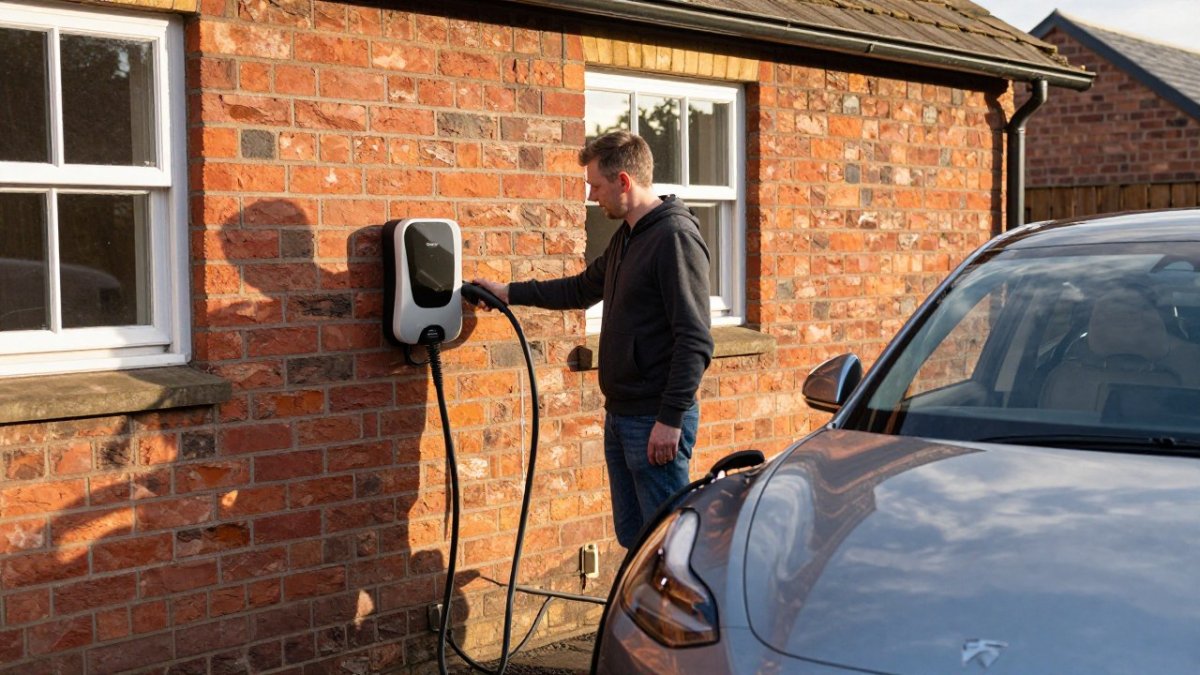
Selecting between alternatives to wall mounted EV chargers depends on your constraints and priorities.
Choose a portable station if: You rent, plan to move within 2-3 years, or have an existing suitable outlet (16A+ industrial socket). Cost is modest, and setup is straightforward.
Choose 3-pin plug charging only if: You have no other option and your driving pattern is genuinely light (under 20 miles daily). Accept that this is a temporary or emergency solution, not a primary charging method.
Choose cable gully installation if: Your parking location sits far from your house, you're staying long-term, and aesthetics matter. The investment is justified by daily convenience and safety.
Choose a smart plug-in charger if: You have a suitable high-capacity outlet, want app control and scheduling, and prefer not to rewire. This offers the best balance of flexibility and features.
Choose a wall-mounted unit from Yorks Ev if: You own your home, plan to stay for years, and want the fastest, most convenient charging available. Our installations complete within 14 days. Our electricians are highly qualified and time-served.
Yorks Ev covers all of Yorkshire with no travelling charge. Our Klarna payment option spreads costs across manageable monthly payments. For homeowners who've decided that permanent home charging makes sense, we deliver reliability and expertise.
The choice between alternatives to wall mounted EV chargers and a permanent installation ultimately reflects your circumstances, not a universal "best" option. Portable solutions work brilliantly for renters and those with specific constraints.
Frequently Asked Questions
Can I charge my electric car using a standard 3-pin plug?
Technically yes, but it is not recommended for regular use. Standard 3-pin plugs deliver only 2.3 kW, making a full charge take 24-48 hours or longer depending on battery size. More importantly, 3-pin charging generates heat that can damage the plug, socket, and cable over time. For occasional emergency charging only, ensure the socket is on a dedicated circuit and never leave the vehicle unattended. Proper EV charging solutions are far safer and more practical for daily use.
What is a cable gully and how does it help with EV charging?
A cable gully is a protective channel or trunking installed in driveways, pavements, or garden paths that safely routes EV charging cables underground or along the ground surface. It prevents cables from becoming trip hazards, protects them from vehicle damage and weather wear, and keeps them out of sight. Cable gullies are particularly useful for homes without garages or where the charging point is far from the vehicle parking area. Installation requires careful planning to comply with local building regulations and electrical standards.
Are portable EV chargers safe for daily home use?
Yes, portable chargers are safe for daily use when they meet UK safety standards and are used correctly. Look for chargers with built-in protection features such as residual current device (RCD) protection, thermal management, and weatherproof enclosures. Portable units are designed for regular charging and include robust safety mechanisms. However, avoid overloading circuits, ensure proper ventilation, and follow the manufacturer's guidelines. If your home's electrics are old or you are unsure, have a qualified electrician assess your installation.
Do I need a dedicated wall-mounted unit to charge my EV at home?
No. Alternatives include portable charging stations, plug-in smart chargers, and cable gully installations that route cables safely without permanent wall mounting. Portable options work well for renters, those with older properties, or homes without driveways. Plug-in chargers offer smart features without hardwiring. However, wall-mounted chargers typically deliver faster charging speeds and are more convenient for daily use. The right choice depends on your electrical capacity, property type, and charging frequency.
What are the regulations for trailing cables across pavements?
Trailing cables across pavements must comply with UK electrical safety standards and local council requirements. Cables must be protected from trip hazards and vehicle damage, typically by using cable covers, cable gullies, or ramps. The cable must not obstruct access or create a public safety risk. Most councils require notification before installation and may have specific guidelines for your area. A qualified electrician will ensure compliance during installation. If you are unsure, contact your local authority or consult a professional installer like Yorks EV for guidance.
Get a Quote

Comments