7 Steps to Safe EV Charging Cable Management at Home
Quick Summary
Good ev charging cable management means routing the cable off walkways, storing it on a hook or holster within easy reach, and protecting it from weather, crushing and wear. Measure the reach from charger to charging port first, so the cable never crosses a path where someone could trip.
Measure from the charger to the charging port position before buying any storage hardware.
Keep the cable off the path, away from doors and clear of the wheel's turning arc.
Use a holster for the plug and a hook or retractor for the cable body.
Inspect the cable before each charge and fully every few months.
Stop using a cable showing splits, exposed wire, heat marks or connector damage.
Table of Contents
Why EV Charging Cable Management Matters at Home
Most EV owners focus on the charger itself and forget the cable. Yet a loose, tangled, or damaged cable is where many home charging problems start. Good ev charging cable management keeps your driveway safe, protects your equipment, and makes every charge easier.
The stakes are real. A cable lying across a path is a trip hazard for children, older relatives, and visitors (Slips and trips in production areas). Cables left in the rain, dragged across gravel, or crushed under tyres wear out faster than most people expect.
Here is what good management does for you:
Reduces trip hazards on your driveway and path
Protects the cable from water, sun, and crushing
Keeps the connector clean and ready to use
Makes the bay look tidy and cared for
Extends the working life of the cable
Think of cable management as part of the installation, not an afterthought. Get it right from day one and you avoid most of the problems below.
Understanding Your Charging Cable: Types, Lengths and Connectors
Before you manage a cable, you need to know what you have. Many UK home chargers use a Type 2 connector on the car end, and the cable is either tethered (permanently attached to the charger) or untethered (you plug it in and take it out).
Check these details before planning your layout:
Connector type: Type 2 is the standard for UK homes
Cable length: Common lengths are around five metres, so measure your bay first
Tethered or untethered: Tethered cables need a holder or retractor; untethered ones need a storage spot
Cable thickness: Heavier cables are harder to coil and need stronger hardware
Watch out: a five-metre cable can fall short if your charger sits at the far side of the bay. Measure from the charger to your car's charging port position before you buy any storage hardware.
Step-by-Step Setup for Clean Cable Routing
Follow these steps to route your cable cleanly. Each step takes only a few minutes once you have the right tools.
eTechvolution
Mark the charging port position. Park your car as you normally would and note where the charging socket sits.
Measure the reach. Run a tape from the charger to that point, adding a little slack.
Plan the route. Keep the cable off the path, away from the door, and clear of the wheel's turning arc.
Fix the storage point. Mount a holder or hook within easy reach of where you stand to plug in.
Check the cable never crosses the walkway. Walk the route and look for any section a person could trip on.
Test a full plug-in. Connect and disconnect the cable a few times to confirm the reach and the hook height work.
Review after a week. Adjust anything that catches, rubs, or hangs too low.
EV Charging Cable Storage: Hooks, Holsters and Retractors
Storage hardware keeps the cable off the ground and out of the weather, but the right choice depends on your cable type, how often you charge, and where the charger is mounted.

Wall hooks and J-hooks. A simple hook or J-hook is the cheapest way to keep a coiled cable off the floor. They suit untethered cables that you coil by hand and hang up after each charge.
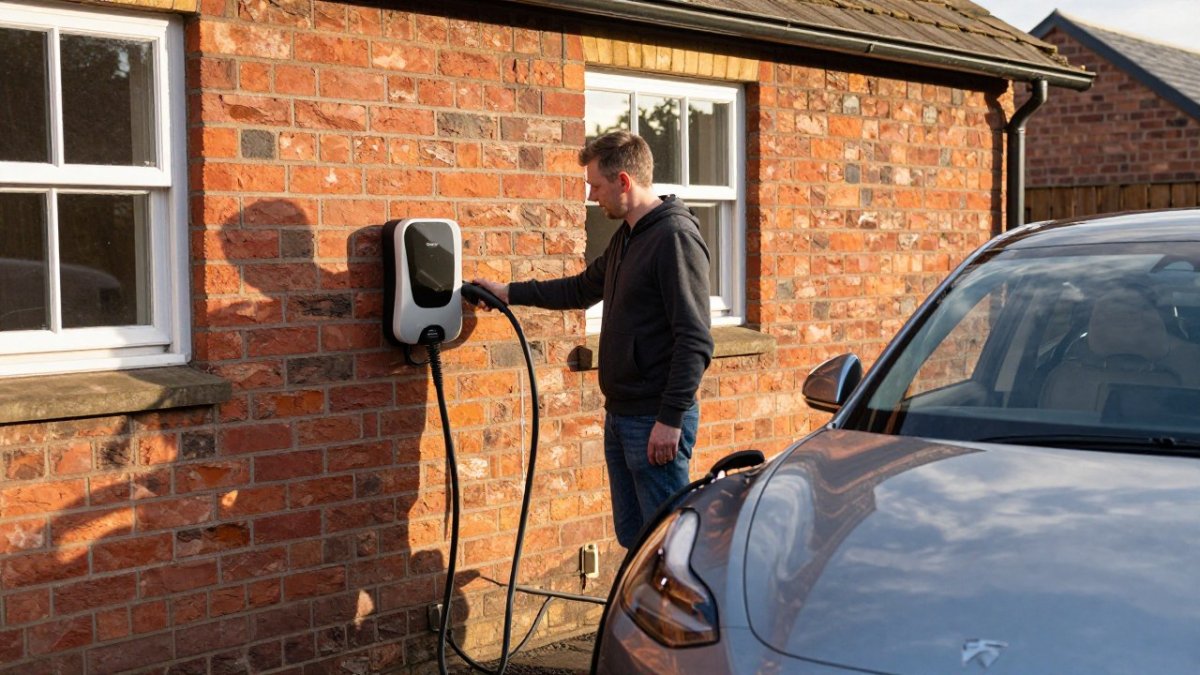
Connector holsters and cradles. A holster holds the plug end, keeping the pins clean and dry and stopping the connector from dangling on the ground. They are usually wall-mounted next to the charger and work well alongside a hook: the hook takes the cable, the holster takes the plug.
Retractors and balancers. Spring retractors and counterweight balancers lift the cable up and out of the way after use. They suit busy driveways, heavier cables and households where more than one person charges.
Cable channels and floor covers. Where a cable must cross a hard surface briefly, a cable channel or floor cover keeps it flat and reduces the trip risk.
When you compare hardware, work through these criteria:
Weight rating: match the unit to the cable's weight, especially for tethered cables.
Weather protection: choose UV-stable, rust-resistant materials for outdoor walls.
Mounting surface: brick, render and timber need different fixings; check the unit suits your wall type.
Bend radius: avoid hardware that forces a tight coil at the connector end.
Drainage: holsters and cradles should let water run off rather than pool.
Reach and height: mount at a height that suits the people who will actually use it, including shorter or less mobile users.
A common pattern for a single home bay is a hook plus a holster. A retractor or balancer earns its place where the cable is heavy or the bay is shared. Cable channels are best kept for short, occasional crossings rather than everyday routing.
Pro Tip Before drilling, hold the hardware against the wall at the intended height and mime a full plug-in and hang-up. If you have to stretch or stoop, adjust the height before you fix anything.
The table below compares the main storage options on the criteria that matter most when choosing hardware.
Option | Best for | Key difference |
Wall hooks and J-hooks | Untethered cables coiled by hand | Cheapest; wide rounded profile avoids tight bends |
Connector holsters and cradles | Keeping the plug clean and dry | Holds the connector; must drain rather than collect water |
Retractors and balancers | Heavy cables and shared bays | Lift cable out of the way; need a weight rating matched to the cable |
Cable channels and floor covers | Short, occasional crossings | Routing aid, not a substitute for keeping cables off walkways |
EV Charging Cable Safety: Trip Hazards, Wear and Weather
Safety is the biggest reason to manage your cable well, and it breaks down into three practical areas: keeping people from tripping, catching wear before it becomes a fault, and protecting the cable from the weather.
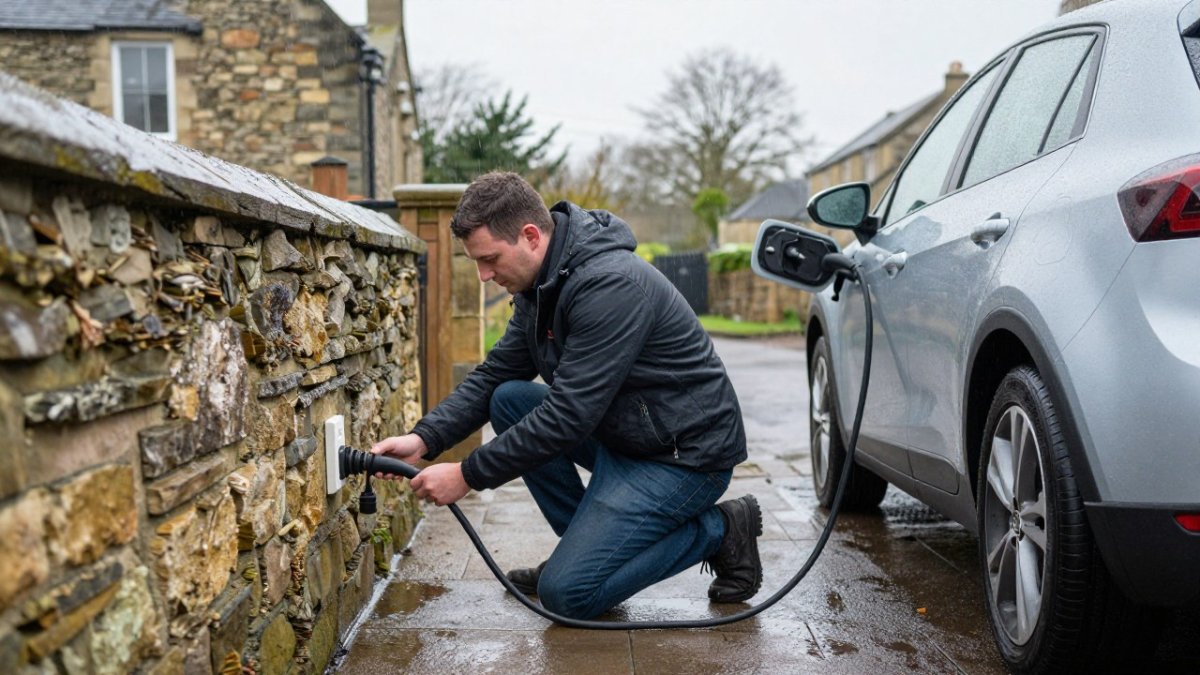
Trip hazards. Never leave the cable across a path, doorway or anywhere someone walks (Slips and trips in production areas). If a child, visitor or delivery driver can reach it, they can trip on it. Route the cable along a wall or behind a planted border where possible, and keep the slack coiled at the storage point rather than looped across the ground.
Wear and damage. Avoid running over the cable, pinching it in a door or garage shutter, and leaving it under a wheel. Keep it off gravel, sharp edges and hot surfaces. A cable that is dragged rather than carried wears at the jacket and at the connector strain relief.
Weather and seasonal storage. Rain, frost, strong sun and standing water all degrade cable jackets over time. A holster or covered storage point protects the connector and cable. In cold snaps the jacket stiffens, so coil it more loosely and avoid forcing tight bends. After hot spells, check for softening or surface cracking.
Inspection schedule and stop-use criteria. A practical routine is a quick visual check before each charge and a fuller inspection every few months. Work through this checklist:
Splits, cracks or abrasion showing the inner sheath
Exposed wire or a soft, spongy section of jacket
A bent, discoloured or corroded connector pin
Heat marks or a burnt smell near the plug
A connector that no longer clicks positively into the car
Water ingress or condensation inside the plug
If you find any of these, stop using the cable and have it checked by a competent electrician before charging again. Do not tape over damage and carry on.
Watch Out A cable that has been run over, crushed or submerged should be treated as suspect even if it looks intact. Stop using it and get it inspected.
Cross-pavement and public-footway safety. Where a cable crosses a public pavement, the trip risk to pedestrians, especially wheelchair users and people with visual impairments, is the main concern. Local rules on cross-pavement charging vary, so check with your local council before planning a layout that crosses a public footway, and do not assume it is allowed. Your local highway authority is the right contact for access and safe-route guidance.
Key Takeaway Good cable safety is mostly routine: keep it off walkways, inspect it before and after charging, and stop using it at the first sign of damage rather than waiting for a fault.
Cross-Pavement EV Charging Solutions and UK Access Rules
Some homes cannot run a cable across a driveway without crossing a public pavement. If that applies to you, you can compare portable and plug-in alternatives to a wall-mounted charger, including options for renters and homes without a driveway. This raises both practical and legal questions.
A cable crossing a pavement can be a trip risk for pedestrians, especially wheelchair users and people with visual impairments. Local rules on cross-pavement charging vary, so check with your local council before you plan a layout that crosses a public footway. Do not assume it is allowed.
If a cross-pavement route is not suitable, consider these alternatives:
Mount the charger on the side of the house nearest the parking space
Use a flexible or portable charging option for occasional use
Ask your installer to check access and routing during the site survey
For guidance on access and safe routes, your local highway authority is the right contact.
Booking Your Home Charger Installation with Yorks Ev
Good cable management starts with a correctly placed charger.
Our family-run team installs domestic EV chargers across North, South, East and West Yorkshire, and we do not charge a call-out fee in those areas. If you want to know how to get a fixed price EV charger installation quote with no hidden costs, that page explains what is included and what a site survey involves. Installations are completed within 14 days, and our standard package includes all materials, labour and VAT. Our time-served, UK-trained electricians handle the work.
If you want a clear figure before you commit, request a quote from Yorks Ev and we will confirm the price for your home. You can also see how the Yorks Ev charger installation works before you book. Flexible payment options, including Klarna, are available.
Frequently Asked Questions
How should you store an EV charging cable when it is not in use?
Keep the cable off the ground and out of direct sun, rain and frost. Coil it loosely in a figure-of-eight rather than tight loops, which reduces internal strain on the conductors. Hang it on a wall-mounted hook, holster or retractor so the connector sits in a protected holder. Avoid leaving the connector exposed to dirt or moisture, and check the cable for kinks or cracks each time you store it.
How can you stop an EV charging cable becoming a trip hazard?
Route the cable along the edge of the driveway or wall rather than across walkways, and use a cable holder or retractor at the charger so it does not hang low. If the charging point sits near a path, consider a cable support or ground-level guide that lifts the cable off the surface. Keep the cable length suited to the bay so there is no excess lying loose, and never leave it trailing across a pavement when the car is not charging.
Can an EV charging cable be left outside?
Most home charging cables are designed to be used outdoors, but repeated exposure to rain, frost, UV light and road grime wears the outer sheath over time. Store the cable in a holster or on a hook when not charging, and avoid leaving it lying in standing water or against hot surfaces. Check the manufacturer's guidance for your specific cable, as ratings for ingress protection and temperature vary between models.
How often should you inspect an EV charging cable?
A visual check every few weeks is a sensible habit, looking for cuts, cracked sheathing, bulges, discoloured or melted connectors, and damage near the plug. Inspect more often if the cable is used in frost, heavy rain or on a shared driveway. Any damage to the outer sheath or connector should be assessed before further use, and a qualified electrician should inspect the charger and its fixings if you notice anything unusual.

Comments