7 Best Home EV Chargers for Detached Houses
Table of Contents
Quick Comparison Table
How We Evaluated Home EV Chargers for Detached Properties
1. Yorks EV: Complete Installation Service
2. ChargePoint Home Flex: Premium Smart Charging
3. Grizzl-E Ultimate 48: Weather-Resistant Durability
4. EVIQO EV Charger: User-Friendly App Control
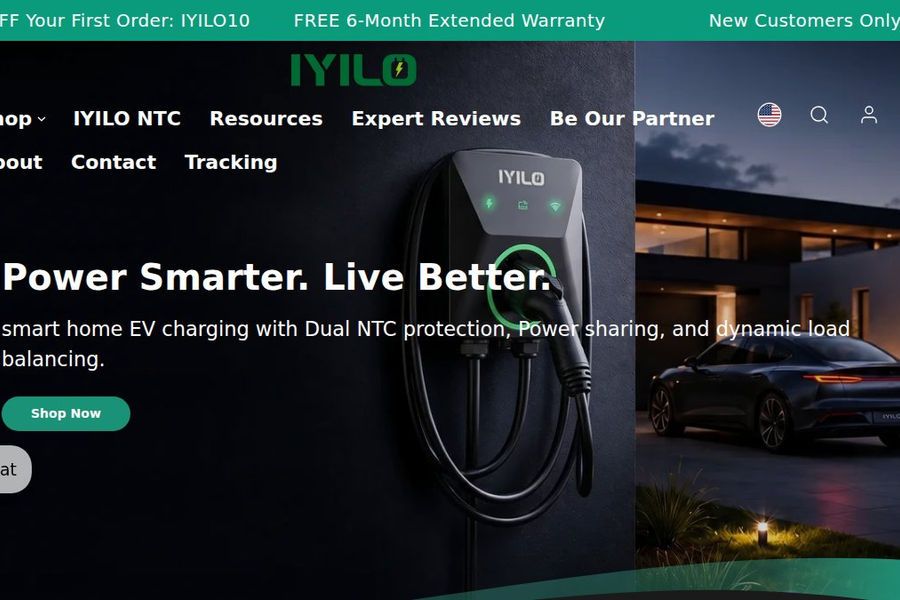
5. IYILO Level 2 Charger: Budget-Conscious Option
Smart Home EV Charging Benefits for Detached Homes
Frequently Asked Questions
Last Updated: September 24, 2026
Quick Comparison Table
Charger | Installation | Key Strength | Best For |
Yorks EV | 14 days | Complete service, no hidden costs | Most detached homes |
ChargePoint Home Flex | Varies | Smart app control, adjustable amperage | Tech-savvy users |
Grizzl-E Ultimate 48 | Varies | Weather-resistant, durable | Exposed outdoor locations |
EVIQO EV Charger | Varies | User-friendly app interface | Simplicity-focused owners |
IYILO Level 2 Charger | Varies | Affordable, reliable | Budget-conscious buyers |
How We Evaluated Home EV Chargers for Detached Properties
Choosing the right home EV charger for a detached house involves more than picking the cheapest option, which is why we've compiled the 7 best home EV chargers for detached houses. The best charger balances installation reliability, durability against weather exposure, smart features that suit your lifestyle, and genuine value for money.
At Yorks EV, we help homeowners across Yorkshire transition from public rapid charging to convenient home charging. We evaluated these chargers on five key criteria: installation complexity for detached properties, weather resistance (crucial when the charger sits exposed on an external wall), app functionality and monitoring, safety features, and whether the total investment, hardware plus installation, delivers real savings compared to public networks.
Detached homes present unique challenges. Your charger may be further from the main consumer unit, requiring longer cable runs. Weather exposure is often greater than in terraced or semi-detached properties. And the installation timeline matters: waiting months for a charger defeats the purpose of owning an EV.
We've also considered the real question homeowners ask when selecting from the 7 best home EV chargers for detached houses: will this charger still work reliably in three years? That's why durability and manufacturer support feature heavily in our assessment.
1. Yorks EV: Complete Installation Service
Yorks EV stands out because we handle the entire process, supply, installation, and aftercare, with no travelling charge across Yorkshire and a guaranteed 14-day installation window. This matters more than you might think.
Most EV charger suppliers sell hardware only. You're left finding an electrician, coordinating the work, managing timelines, and hoping nothing goes wrong mid-installation. With Yorks EV, that complexity disappears. Our highly qualified, time-served, UK-trained electricians arrive with all materials included. No hidden costs for rewiring, no surprise charges if your electrics need minor upgrades within a standard installation scope, as our standard supply and installation package includes all materials, labour and VAT.

The 14-day promise is backed by real logistics. We've simplified the process so that booking, surveying, and installation happen in sequence without delays.
Flexible payment through Klarna means you don't need to pay the full amount upfront. That makes home charging accessible whether you're cash-rich or prefer to spread the cost.
Pro Tip Yorks EV's standard package includes all labour, materials, and VAT. Before accepting quotes from other installers, ask what's NOT included, cable extensions, electrical upgrades, or certification paperwork often come as extras elsewhere.
Pros: Family-run business with deep Yorkshire roots, installations completed within 14 days, highly qualified electricians with UK training credentials, no travelling charge across North, South, East, and West Yorkshire, all materials and labour included in quoted price.
Cons: Service area limited to Yorkshire (though this is actually a strength for local customers who value responsive support).
2. ChargePoint Home Flex: Premium Smart Charging
If you want granular control over your charging, ChargePoint Home Flex delivers it. The app lets you adjust amperage on the fly, schedule charging for off-peak hours, and monitor energy usage in real time. This appeals to users who enjoy optimising their setup rather than just plugging in and walking away.
The hardware supports adjustable charging speeds up to 50 amps, which means the charger adapts to your home's electrical capacity. You're not forced into a one-size-fits-all approach. Wi-Fi connectivity and Energy Star certification add credibility, this is a serious piece of equipment, not a budget corner-cutter.

For detached homes where you might want to schedule charging around other high-draw appliances (heating, water heater), the scheduling features are genuinely useful. You avoid overloading your consumer unit by staggering when the charger draws power.
The tradeoff is price and complexity. Setup requires some technical confidence. If you just want to plug in your EV and forget about it, this level of control feels like overkill.
Pros: Excellent mobile app with real-time monitoring, flexible installation options, adjustable amperage for different home electrical setups, Wi-Fi-enabled scheduling.
Cons: Higher price point than basic models, setup complexity may deter non-technical users.
3. Grizzl-E Ultimate 48: Weather-Resistant Durability
Detached homes often mean the charger sits fully exposed, no garage shelter, no covered driveway. Grizzl-E Ultimate 48 is built for exactly that scenario. The NEMA 4 weather-resistant enclosure keeps moisture and temperature extremes from damaging internal components. This is industrial-grade durability, not a consumer gadget.
Adjustable amperage from 16A to 48A means you can scale the charging speed to your home's capacity. Simple plug-and-play operation removes the need for complex setup. Just mount it, plug it in, and it works. The universal J1772 connector works with almost any EV on the road.
Where Grizzl-E sacrifices is smart features. No app, no Wi-Fi, no scheduling. You get a reliable charger that charges your vehicle, nothing more. For owners who view the charger as appliance rather than connected device, that's a strength. For those wanting to monitor usage or optimise charging times, it's a limitation.

Detached homes in exposed locations (coastal areas, windswept moorland, high-rainfall regions) benefit most from this approach. The charger simply outlasts others in harsh conditions.
Pros: Extremely durable construction rated for weather exposure, adjustable amperage settings, simple and reliable operation, universal connector compatibility.
Cons: Lacks smart features like app control or scheduling, no energy monitoring.
4. EVIQO EV Charger: User-Friendly App Control
EVIQO prioritises usability. The mobile app is genuinely intuitive, something many charger manufacturers get wrong. Remote start and stop, charging session history, and cost tracking are all cleanly presented. If you're the type who enjoys seeing data and understanding your energy consumption, this charger makes it engaging rather than frustrating.
Compact design means it doesn't dominate your wall space. For detached homes where aesthetics matter (you see the charger every time you pull into the driveway), this matters more than most listicles admit.

Safety monitoring runs continuously. The charger watches for electrical faults and shuts down safely if something goes wrong. This is standard on reputable chargers, but EVIQO's implementation is transparent, you see alerts in the app rather than guessing why the charger stopped.
The limitation is hardware customisation. You can't adjust amperage or tweak advanced settings. If your home's electrical setup requires fine-tuning, EVIQO won't let you do it. You get a fixed configuration that works for most homes but may not be optimal for yours.
Pros: Best-in-class app experience with clear, accessible interface, easy installation process, compact design, safety monitoring with app notifications.
Cons: Limited hardware customisation, no amperage adjustment, fewer advanced features than premium models.
5. IYILO Level 2 Charger: Budget-Conscious Option
IYILO fast Charger proves you don't need to spend heavily for reliable home charging.
Watch Out Basic chargers lack app monitoring, so you won't spot electrical faults until the charger stops working entirely. If early warning of problems matters to you, consider a smart charger instead.
Pros: Highly affordable, strong safety protection circuitry, 48-amp capacity suitable for most homes, hardwired installation for durability.
Smart Home EV Charging Benefits for Detached Homes
Key Takeaway Smart chargers pay for themselves through off-peak scheduling and reduced reliance on expensive public rapid charging. For detached homes with variable electricity demand, load balancing prevents costly electrical upgrades.
Remote access means you can start or stop charging from your phone. Useful when you're away from home and suddenly need your vehicle ready sooner than planned. It's convenience that sounds minor until you need it.
Frequently Asked Questions
Do I need a smart charger for my detached house?
Not necessarily. A basic fast charger will charge your vehicle reliably, but smart chargers offer advantages for detached properties. Smart models let you schedule charging during off-peak hours to reduce costs, monitor energy use via an app, and integrate with home energy systems. For detached homes where the charger sits exposed to the elements, smart features like remote diagnostics can help you spot issues early. Choose based on your budget and whether you want cost optimisation or just simple, dependable charging.
What are the main installation considerations for detached houses?
Detached properties often require longer cable runs from your consumer unit to the charger location, which affects installation complexity and cost. Weather exposure matters too, chargers mounted on external walls need robust, weatherproof enclosures. Your home's electrical capacity is critical; if your consumer unit cannot handle the charger's amperage, upgrades may be necessary. Professional installers assess your specific setup, including distance from the panel, existing circuit capacity, and whether hardwiring or a plug-in installation suits your situation. Qualified electricians can identify any additional work needed before quoting.
Can I get a grant to help with EV charger installation costs?
The Office for Zero Emission Vehicles (OZEV) grant scheme previously offered support for home charger installations, but eligibility and availability change. Check the current OZEV scheme status on the official government website to confirm whether grants are available for your installation. Eligibility typically depends on factors like your vehicle type, property ownership status, and installation timeline. Some installers, including specialist EV charging companies, can advise on current grant opportunities and help you understand what support you might qualify for.
What's the difference between tethered and untethered EV chargers?
Tethered chargers have a cable permanently attached to the unit, so you don't need to carry a separate lead, just plug in and charge. Untethered chargers require you to bring your own charging cable. For detached homes, tethered chargers are often more convenient since the cable is always ready, and you won't accidentally leave it behind. However, untethered models are typically more affordable and offer flexibility if you use multiple vehicles with different connector types. Your choice depends on how many vehicles you charge and whether you value convenience or cost savings.
Choosing a home EV charger for a detached house comes down to balancing speed, reliability, features, and cost. Yorks EV handles the entire process with qualified electricians and a guaranteed 14-day installation, removing the complexity most homeowners dread. Get a quote from Yorks EV today and discover how convenient home charging transforms your EV ownership.
Get a Quote


Comments